
Upskilling and Reskilling for the ‘Twin Transition’: Digital and Green Transformation
Aspects of Quality in Basic Skills Provision, Professional Development at All Levels of Implementation
Learning from the past – preparing for the future basic skills for adults in 2030
Innovation for Resilience – New Approaches to Basic Skills Provision in the Post-COVID Era
Following the COVID lockdown period we found it very important to offer the possibility for our members and the interested professionals to meet again physically and have a real conference. As announced earlier, together with our Maltese member and partner, the Directorate for Research, Lifelong Learning and Employability (DRLLE) from the Ministry for Education, MFED we managed to agree on the organization of a presential conference in Valletta, Malta.
For the first time the EBSN conference was organised in a hybrid form.
Access conference Padlet directly here!
Online
|
Welcome to the opening page of EBSN’s first online conference. As a response to the challenging situation caused by the COVID-19 pandemics EBSN has decided to organise its annual conference online in 2020. The aim of the conference, entitled ‘Achieving Upskilling Pathways’, is to address the challenges posed by the recent events and follow up new developments in EU policy (EU Skills Agenda) and the results of implementation efforts of the Upskilling Pathways recommendation. The three-day event will consist of thematic workshops with presentations, followed by discussions and by interactivity on a number of platforms (Virtual Marketplace, Project Generation Facility), which will be available for further dialogue, networking, partnership-building among participants. |
Conference padlet
The padlet for the conference is open to everyone who wishes to learn more about the conference, the speakers and EBSN’s new initiatives. Register and log in and contribute with your name to the conference padlet!
Find a manual to using the conference padlet here.
Access conference padlet directly here!
Virtual Marketplace
We are continuing the tradition from EBSN annual conferences of providing a space i.e. marketplace for sharing information and networking. This year the marketplace is hosted in an allocated section in the conference padlet. The Virtual Marketplace is dedicated to promoting interaction, networking, and sharing additional resources beyond those presented at the workshop talks.
Conference Declaration
The Conference Declaration is an important element of all EBSN conferences. You can find the first draft of the declaration in the conference padlet. Add you comments in the dedicated padlet post below and be part of the co-creation of the 2020 Conference Declaration!
Project Generation Facility
The EBSN Secretariat is initiating an online platform dedicated to participants who would like to reach out and connect with each other with the aim to establish actual collaborations and join forces for project ideas in the field of basic skills development. The Member Organisations’ diverse background represent a significant potential for partnership-building. The Secretariat wishes to further promote cooperation among EBSN Members and beyond. Access the Facility by first registering to the event. We will send you the link to the Project Generation Facility. Find a short manual on how to use the Facility here.
EBSN Café
EBSN Secretariat is initiating a new action for promoting interaction and a sense of cooperation and belonging to EBSN Members! We will present the main frames of the Café at the conference!
Invited experts and organisers

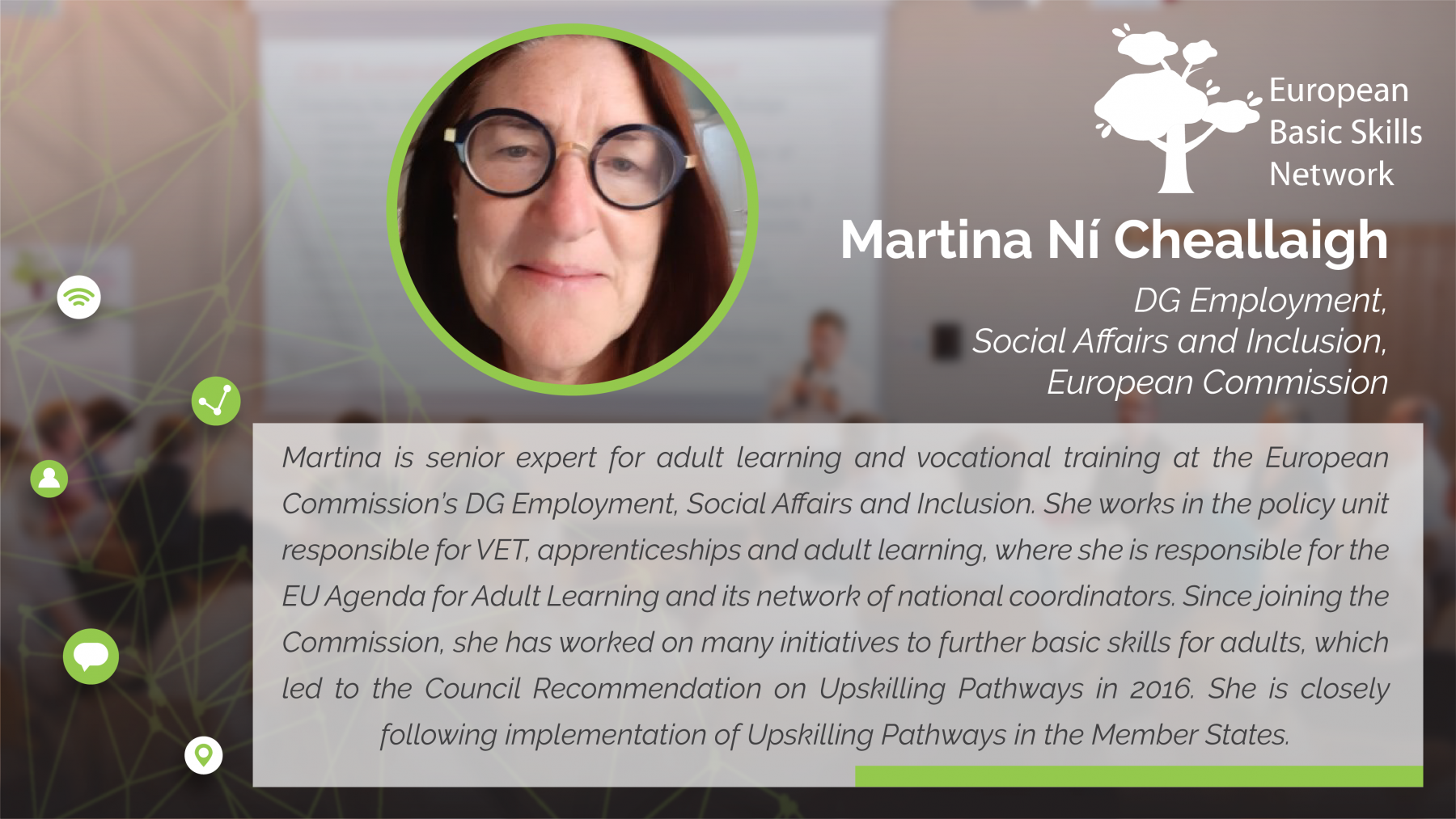
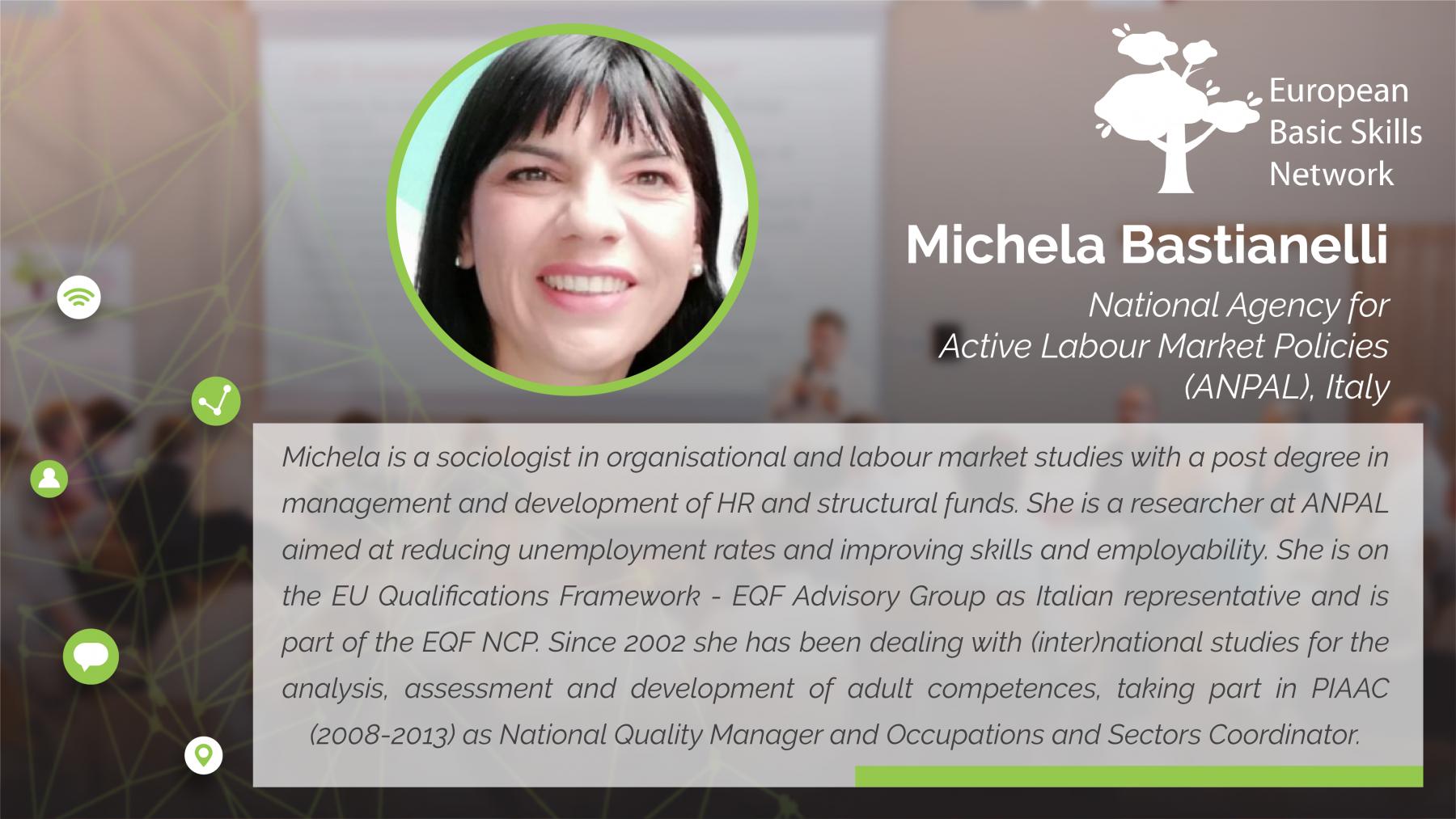
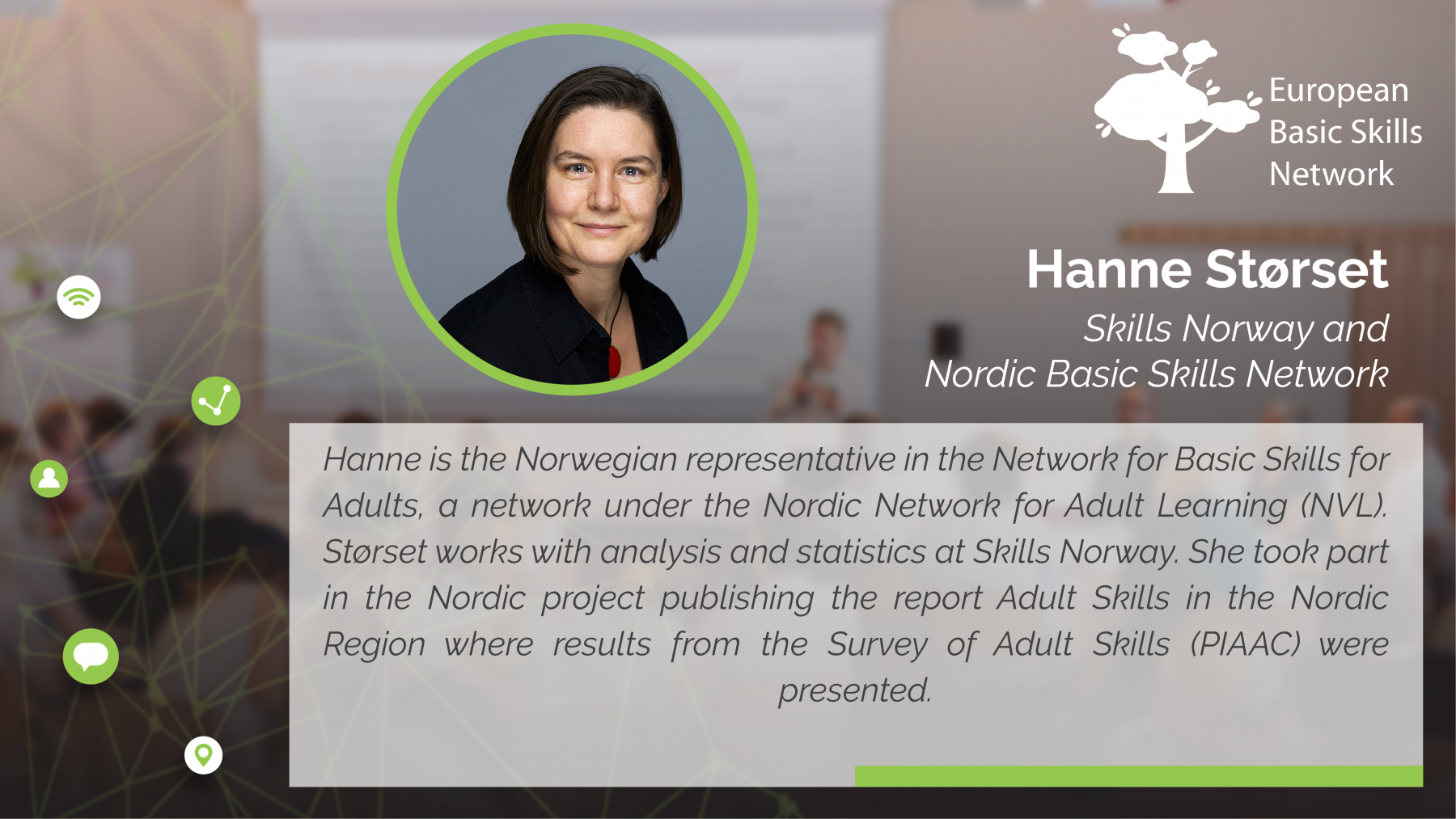
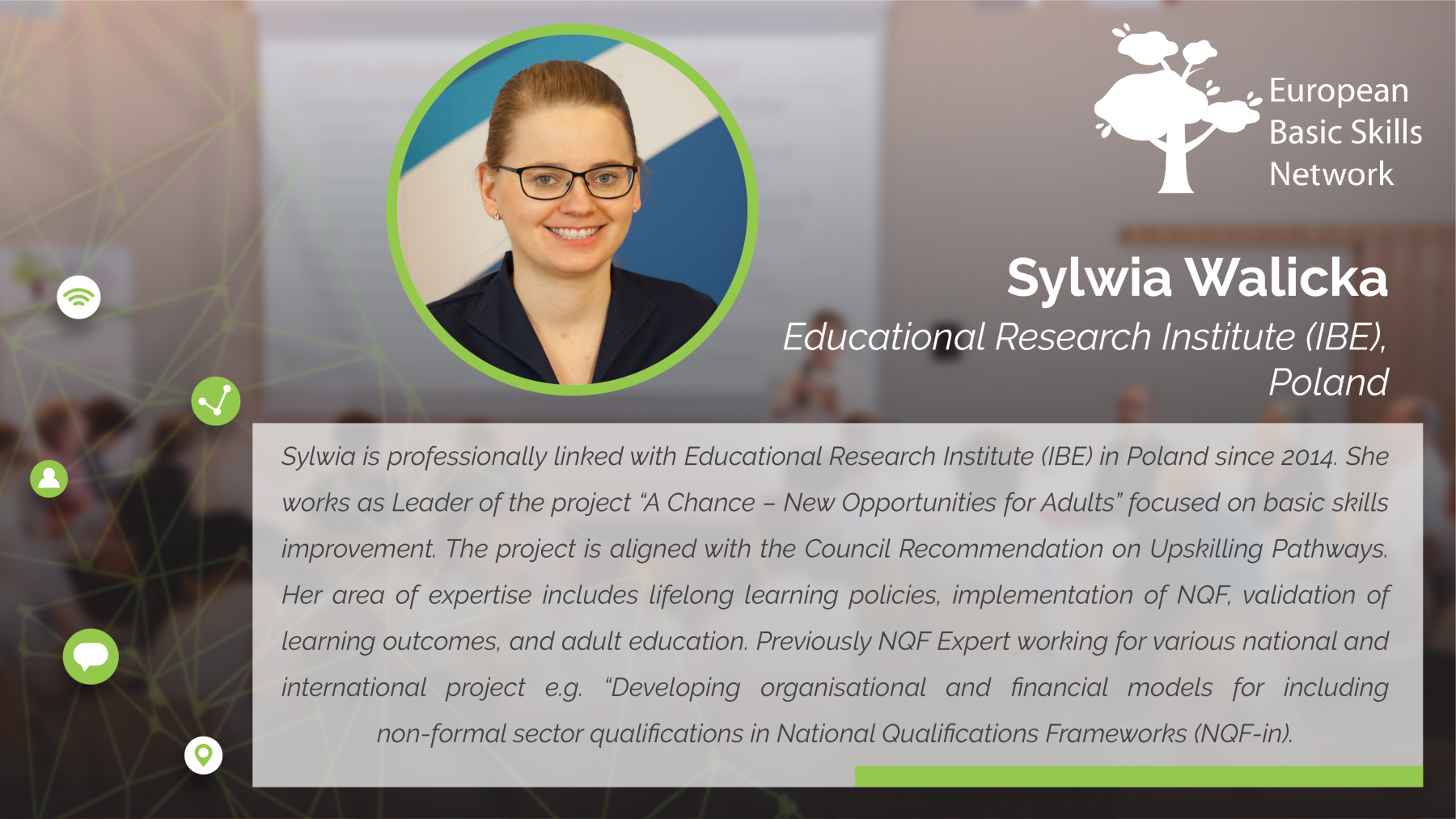
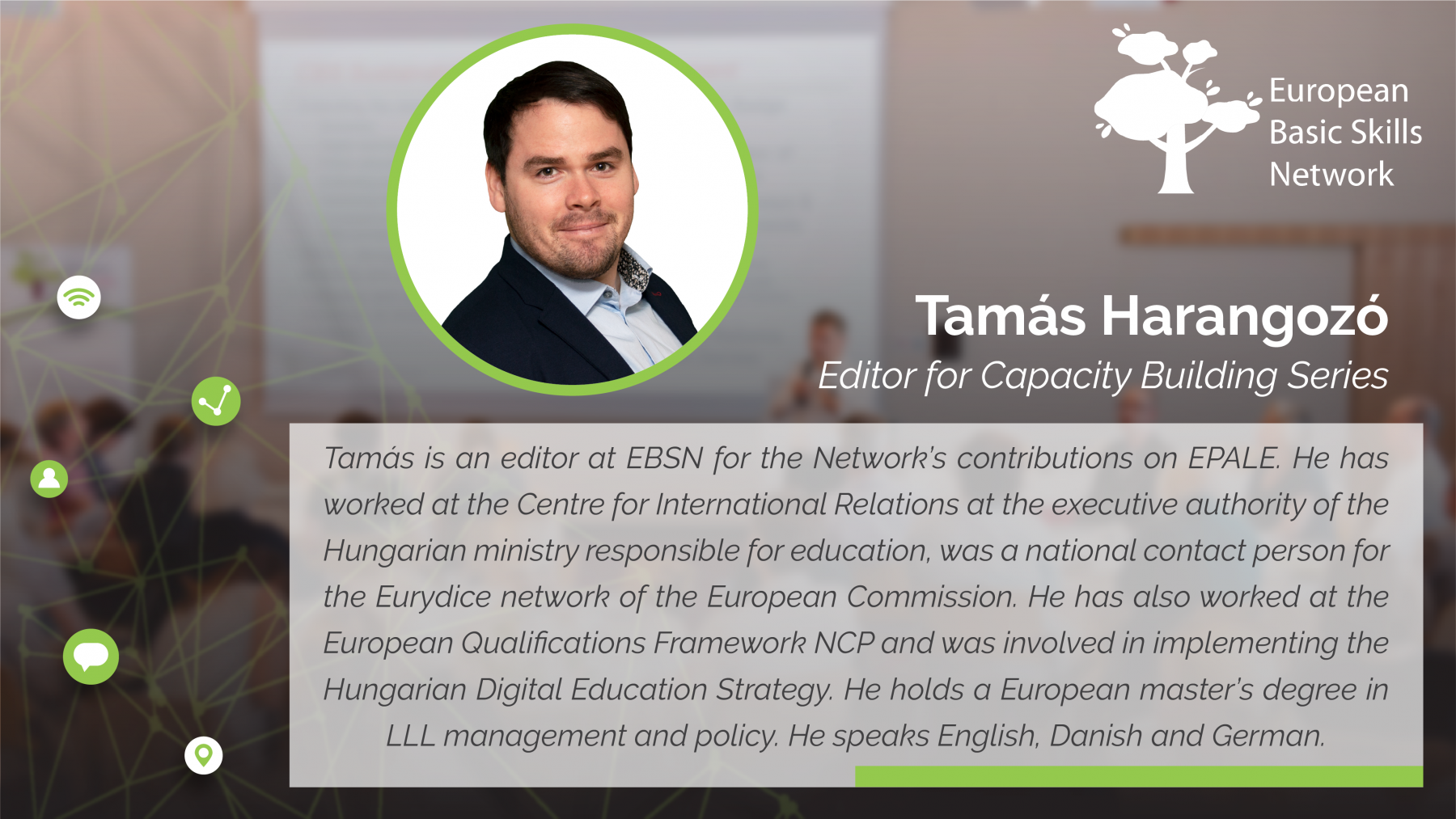
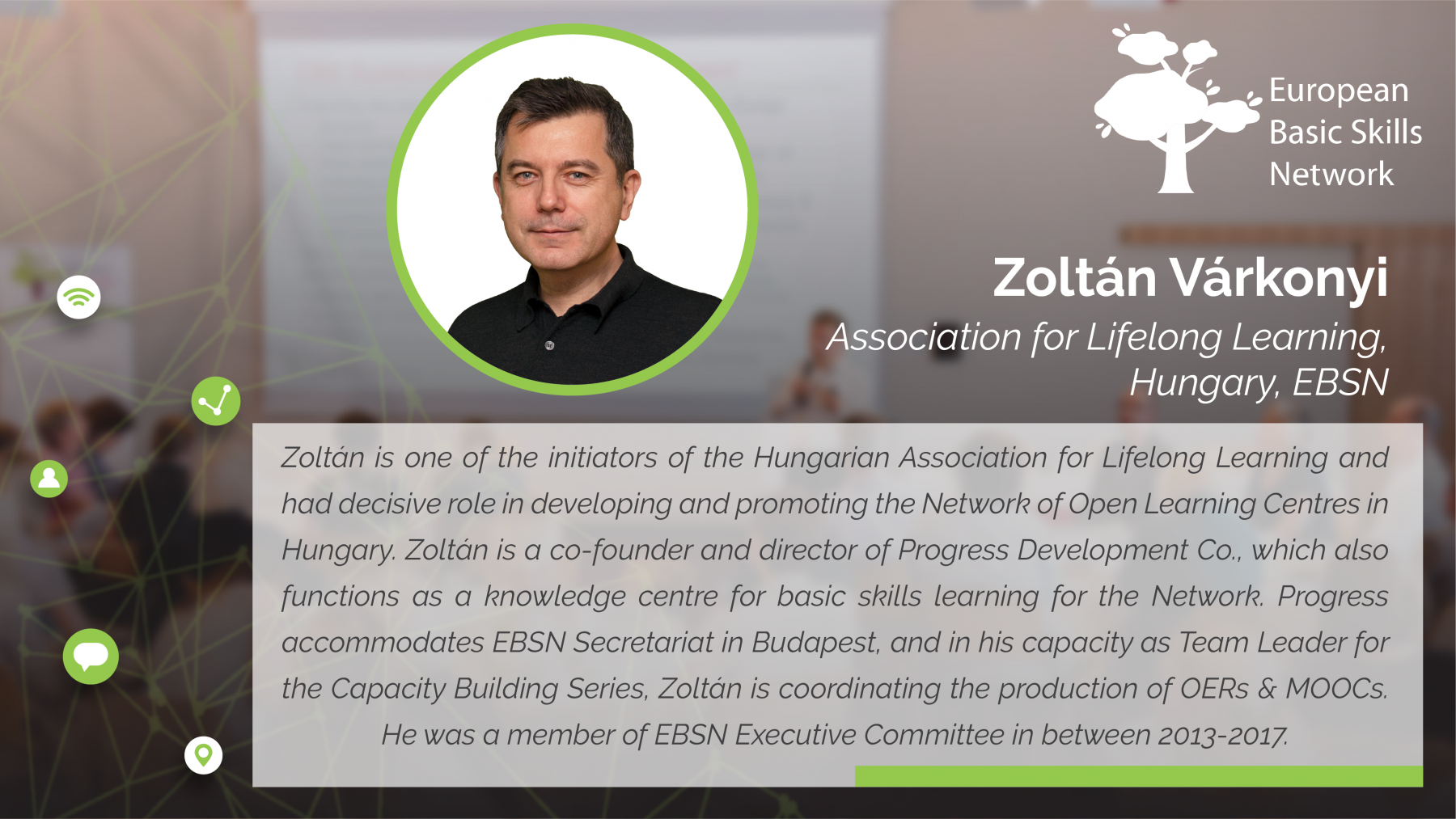
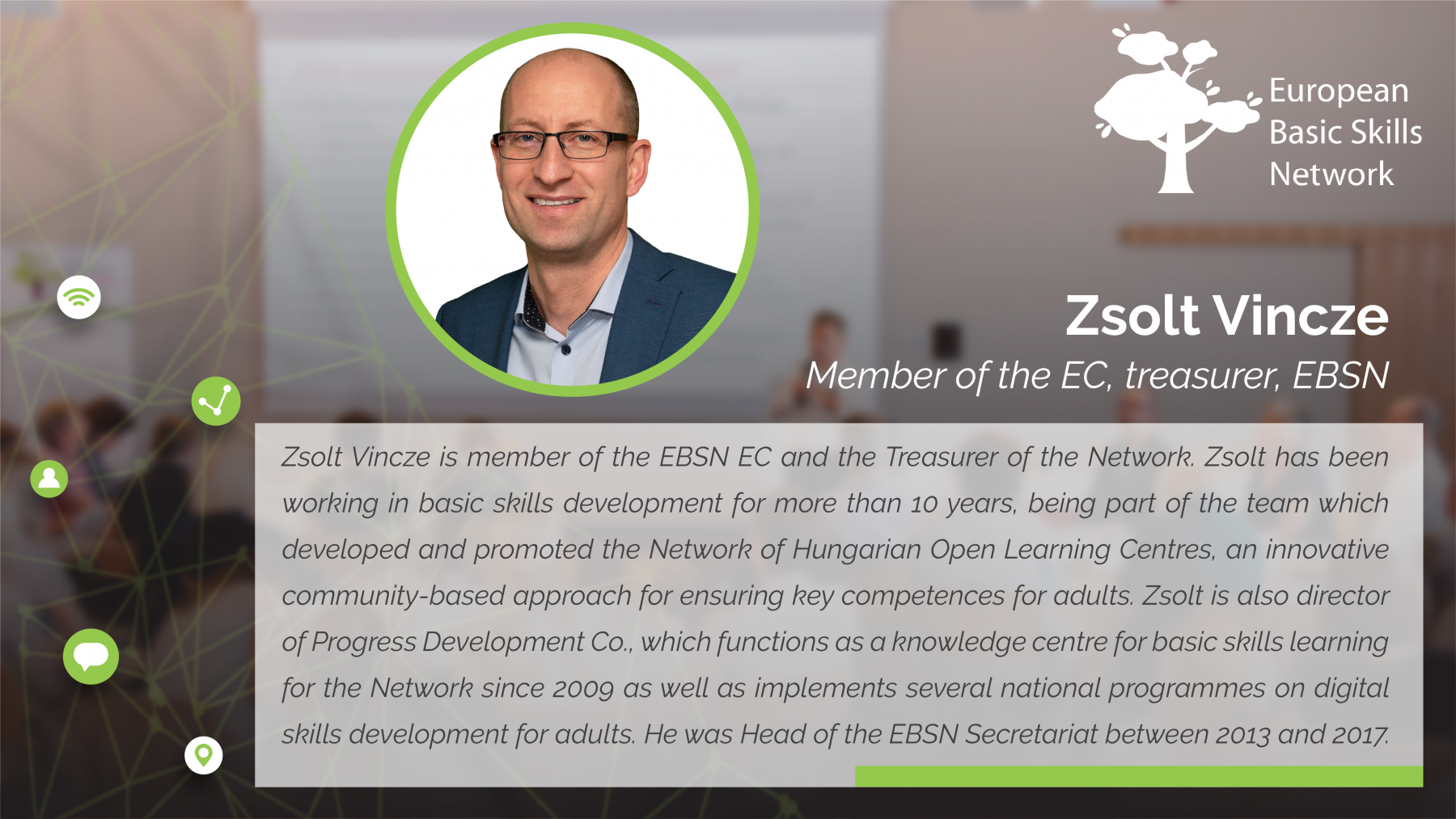


For more technical and practical information about the conference, please get in touch with us through e-mail: secretariat@basicskills.eu.
Making it happen: from policy to implementation
This year’s EBSN event was organized in cooperation with the Association of Estonian Adult Educators – Andras, the Estonian Non-formal Adult Education Association and the Ministry of Education and Research of Estonia.
Plenary Presentations
Why we need fairy tales –basic skills today and tomorrow – Maarja Vaino, director of Tallinn Literary Centre
The EBSN Capacity Building Series – Zoltán Várkonyi and Tamás Harangozó, EBSN EPALE Team
The EBSN’s CBS in the context of the Upskilling Pathways initiative – Paul Holdsworth, Unit “Skills for Adults” at DG Employment, Social Affairs & Inclusion at the European Commission
Workshop Presentations
Volkshochschulen: Basic education in the service of a democratic society – Celia Sokolowsky, DVV, German Adult Education Association, Germany
Structural Flemish approach: the Strategic Literacy Plan – Sara Jaminé, VOCVO, Belgium
Education and training in correctional centers – Vassiliki Nikolopoulou and Angeliki Lytsiou, Ministry of Education, Research and Religious Affairs, General Secretariat for Lifelong Learning, Greece
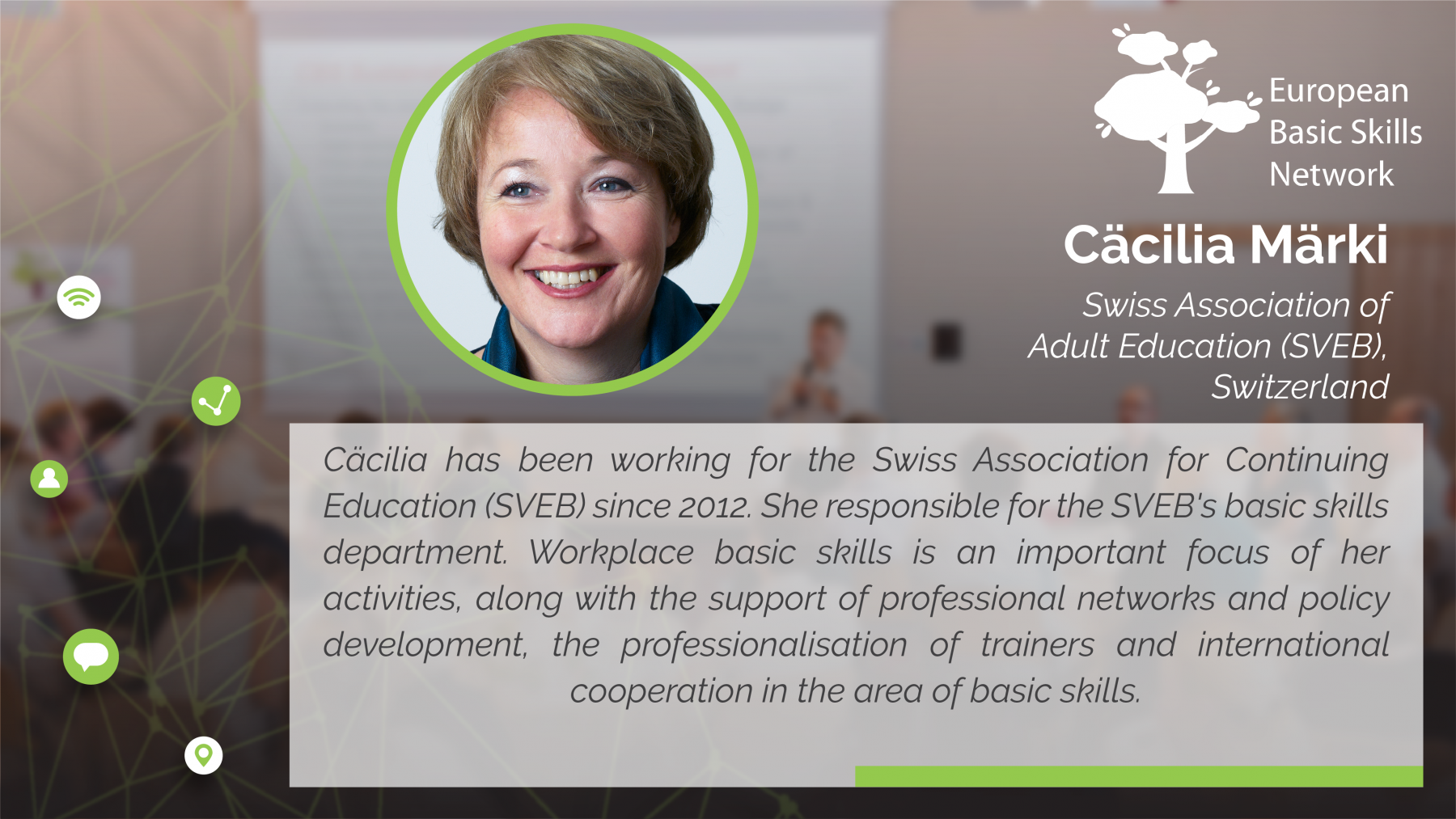
Basic Skills policies in Switzerland – basic skills within the framework of the recent Swiss law on further education – Cäcilia Märki, Swiss Association of Adult Education (SVEB), Switzerland
Basic Skills in Finland, policy and implementation – Leena Nissila, Finnish Agency for Education, Finland
Policy Support for the Implementation of Upskilling Pathways in Hungary – Zoltán Várkonyi and Enikő Jarmaczki, EBSN EPALE Team, Hungary
Take the first step – a national literacy and numeracy awareness campaign in Ireland – Clare McNally, NALA, Ireland
Combatting low literacy by targeting specific groups: CINOP’s innovative pilots for the Dutch government programme ‘Count on Skills’ – Myriam de Hoo, CINOP, Netherlands
Applying the goals of national policy to the individual’s needs – approach, methods and results of the work of Fønix, Norway – Jan Evensen, Fønix AS, Norway
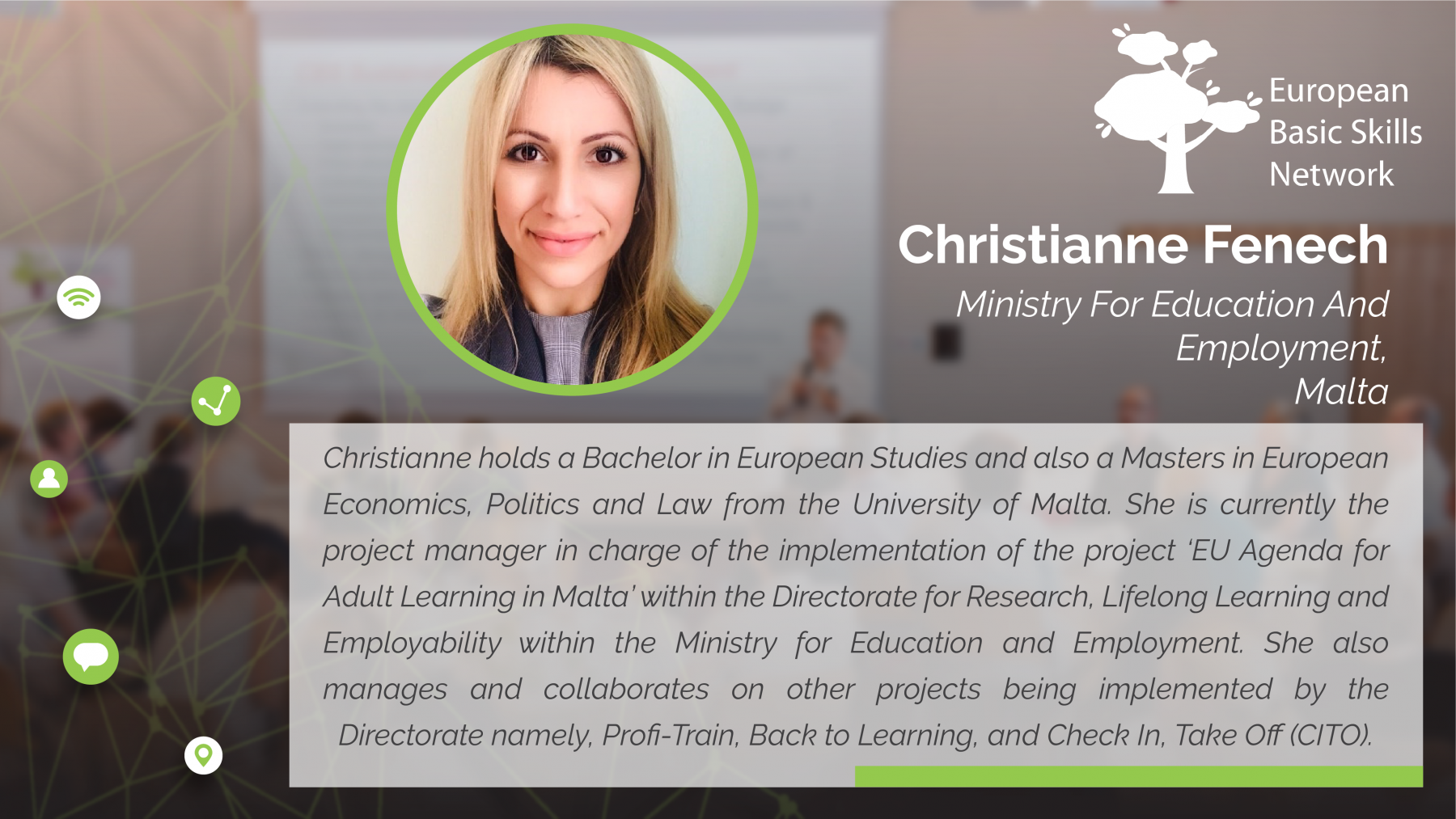
Professionalisation of Trainers for Work Based Basic Skills – Christianne Gatt Fenech, Directorate For Research, Lifelong Learning and Innovation, Malta
Supporting professional development of adult trainers in Estonia – Mai Timmi, Ministry of Education and Research, Estonia
Teacher training for implementation of VARK learning strategies for adults with low basic skills – Patrick Ramberg Singler, Fønix AS, Norway
Carousel Presentations
“Are you as good as you think you are?” – Promoting self-assessments with social media – Ingrid Radtke, Skills Norway, Norway
Adult Learning curricula for developing key competences of employees – Agnese Zarāne, Ministry of Education and Science Department of Vocational and Adult Education, Latvia
Learning and teaching basic skills and key competences in non-formal adult education centres and folk high schools in Estonia –Ena Drenkhan,
Tartu Folk High School, Estonia, Margit Düüna, Training center Osilia, Estonia
Teenage tutors facilitating the acquisition of e-skills by older learners: the problem of tutor’s self-preparation and tacit knowledge – Tiina Tambaum, Estonian Institute for Population Studies, Tallinn University, Estonia
Towards a Common European Numeracy Framework – Dr Kees Hoogland and Dr. Mieke van Groenestijn, HU University of Applied Sciences Utrecht, The Netherlands
Lend Me Your Ears: when adults read aloud instead of in silence – Sam Duncan, UCL Institute of Education, UK
Back to learning to formal education system – Karin Kurvits, Headmaster of Pärnu Adult Gymnasium, adult trainer, Estonia and Merle Protsin, Students counsellor, former student of Pärnu Adult Gymnasium, Estonia
Access to Basic Skills
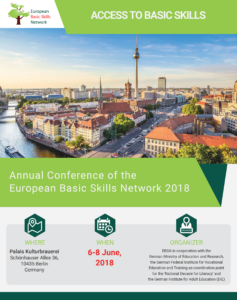
Berlin, 6- 8 June 2018
Venue:
Palais Kulturbrauerei Berlin
Photo Gallery (soon)
Plenary Presentations
Literacy and Basic Skills Policy in Germany – Dr. Ulrich Raiser, chairman of the task force for Further and Adult Education of the Länder and Head of the Unit Adult Education and Basic Skills, Senatsverwaltung für Bildung, Jugend und Familie
The Decade for Literacy in Germany – cooperation and implementation – Karin Küßner, Head of National Coordination point „Decade for Literacy“, Federal Institute for VET
Pathways to basic skills, challenges and success criteria – Prof. Dr. Josef Schrader / Monika Tröster, director of the German Institute for Adult Education and Speaker of the National Scientific Board of the Decade for Literacy
Presentation of the EBSN Capacity Building Series – The EBSN-EPALE Team
The regional strategy for Literacy and Basic Skills and the Alpha-Award in Berlin – Tim Opitz, Senatsverwaltung für Bildung, Jugend und Familie
Workshop Presentations
Workshop 1 / Presentation No. 1: “Education and Skills Online Assessment” Presentation by Estera Mozina (Slovenian Institute of Adult Education)
Workshop 1 / Presentation No. 2: “Online Skills Online Assessment” Presentation by Miryam de Hoo (CINOP, Netherlands)
Workshop 2: Basic Skills in VET Presentation No. 1: “Upskilling Pathways – Linking Basic Skills and Vocational Learning to Support Progression” Presentation by Alex Stevenson (Learning & Work, UK)
Workshop 2 / Presentation No. 2: “Integration of literacy and numeracy across the VET – policy and procedure” Presentation by Inez Bailey (NALA, Ireland)
Workshop 3 / Presentation No. 1: “Schools as Community Learning Spaces”. Presentation by Christianne Fenech (Directorate for Research, Lifelong Learning and Employability, Malta)
Workshop 3 / Presentation No. 2: “Initial literacy for newly arrived women in Catalan rural areas” Presentation by Caterina Casanovas (ACEFIR, Spain)
Workshop 4: “Basic skills: Journalistic competences for adult educators” LEK-AE project. Presenters: Wilfried Frei (AT); Michael Sommer, (DE); Raffaela Kihrer (EAEA); Maurice de Greef, (BE and NL)
Summing up the main messages of the conference / David Mallows:
In 2019 the EBSN Annual Conference will be organised in Tallin, Estonia in cooperation with the Estonian Ministry of Education and Research, and the Association of Estonian Adult Educators Andras
Basic Skills for Integration
31st May- 2nd June, 2017, Luxembourg
Venue:
Ministry of Education, Children and Youth and Centre Culturel Tramsschapp
Plenary Presentations
The importance of basic skills in a multilingual and multicultural country – Erik Goerens, director, Ministry of Education, Children and Youth, Luxembourg
Skills, Education, Integration – Filip Tanay, Policy Analyst, DG EMPL, European Commission
Language Socialisation and the language education of adult migrants in Europe – David Mallows, UCL Institute of Education, London, UK
System crash and reboot of the German integration system. Providing basic skills for 1 Million immigrants – Karsten Schneider, Managing Director at the Association of Adult Education in Saarland and Dirk Wolk-Pöhlmann, Chairman of the DVV working committee on Integration and Language Acquisition, Germany
Basic skills – a key element of the integration procedure in Luxembourg – Chantal Fandel, Ministry of Education, Children and Youth, Luxembourg, Adult Learning Department
Mobile interaction for Refugee integration (MiRi) in Luxembourg
Summing up the main messages of the conference / David Mallows
National policy – Local implementation
1st – 3rd June, 2016, Ljubljana, Slovenia
Venue:
Headquarter of the Slovenian Institute for Adult Education and Radisson Blu Plaza Hotel Ljubljana
Plenary Presentations
Basic Skills in the context of the European Commission’s priorities – Dana Carmen Bachmann, Head of Unit for Vocational Learning and Adult Education, DG EMPL, European Commission
Adult Skills in the European Agenda for Adult Learning the Slovenian perspective – Zvonka Pangerc Pahernik, SIAE
The EBSNs contribution to the Agenda activities, plans and visions – Graciela Sbertoli, EBSN
EBSN’s Contribution for the creation of a European wide EPALE community – Zoltán Várkonyi, EBSN EC Member
The Education 2030 Agenda (SDG 4) and Implications for Literacy, Basic Skills Policies – Ulrike Hanemann, UNESCO Institute for Lifelong Learning
Increasing adult skills and competences the Slovenian model – Estera Mozina and Petra Javrh, SIAE
Roundtable discussion: (video) From national governance to local implementation: challenges and possibilities. – National Coordinators for Adult Learning in Slovenia and neighbouring countries, Facilitator: Hanne Christensen, CEDEFOP
EPALE Developments and plans – Rumen Halachev, EPALE CSS
EPALE Slovenia – Marusa Bajt, EPALE NSS Slovenia
Summary of EBSN 2016 Conference results (video)
Strategies that work: governance, financing and implementation in the provision of basic skills for adults
3rd – 5th of June, 2015, The Hague, The Netherlands
Venue:
The Dutch Ministry of Education
Plenary Presentations
Focus on Basic Skills in The Netherlands – Caroline Liberton, Hans Hindriks, Dutch Ministry of Education, Science and Culture
Policy coherence / Transcript – David Mallows, National Research and Development Centre for Adult Literacy
Towards European Synergies in the field of Basic Skills – Maria Toia, Romanian Institute for Adult Education
Challenges to Policy Cohesion The Skills for Life Story – Joyce Black, National Institute of Adult Continuing Education
Basic skills network effective policies and strategies for adult education in the light of PIAAC – Pieter Baay, Expertisecentrum Beroepsonderwijs
Funding Basic Skills Learning Basics, instruments and recommendations – Bernhard Grämiger, Swiss Federation of Adult Learning
Lifelong Learning in Andalucía Education System – Francisco Castillo, Junta de Andalucía
The role of local municipalities and labor market regions in adult education monitoring quality – Merel Louter, Damayanti Gunawan, Municipality of Amsterdam
Professionals & Non-Professionals in basic adult education – Wim Matthijsse, Reading and Writing Foundation
EPALE and the adult learning community – Eva Alos Melchor, Rumen Halachev, Ecorys (EPALE)
Why EPALE – a vision from EBSN perspective – Zoltán Várkonyi, Association of Lifelong Learning
Poster Presentations
ELINET Country Report Framework – David Mallows, National Research and Development Centre for Adult Literacy
The Austrian Initiative for Adult Education – Mag. Maria Groß, the Austrian Federal Ministry of Education and Women’s Affairs
Literacy Screener – Naomi Coenraad, Stichting Lezen & Schrijven
Basic skills training as preparation for formal vocational training and certification in companies – Jan Evensen, Folkeuniversitetet Sør-Øst
Video: Competence development at Bakers AS – Jan Evensen, Folkeuniversitetet Sør-Øst
Straighten basic skills – Dieter Zisenis, bbb Büro für berufliche Bildungsplanung
Action research to improve youth and adult literacy: Empowering learners in a multilingual world: Presentation / Research Report – Ulrike Hanemann, UNESCO Institute for Lifelong Learning
Swiss Model to promote basic skills in the workplace – Bernhard Grämiger, Swiss Federation of Adult Learning
Literacy for all – European Library network – Lianne Knobel, Breda Library
Basic skills for social inclusion and cohesion
Budapest, May 21st – 23rd
“Basic skills for social inclusion and cohesion” – Organized in cooperation with the Hungarian Association for Lifelong Learning, ALLL
Presentations
Towards an inclusive Europe – Maurice de Greef, Vrije Universiteit Brussel
The PIAAC results – what do they may mean for basic skills development in Europe? – Anders Fremming Andersen, Vox
Evidencing social inclusion through basic skills learning – Emily Jones, NIACE, UK
Family learning – Intergenerational learning: An inclusive and cohesive policy – Maria Toia, IREA, Romania
Numeracy for Inclusion – Susan Easton, NIACE, UK
The Hungarian TAMOP program: Basic Skills for Employment – Tamás Köpeczi-Bócz dr., Deputy State Secretary, Ministry of Human Resource
Developing Skills in Prison setting – experiences of a project – László Huszár dr., Prison Service Brigadier General, Hungarian Prison Service Headquarters
The Hungarian Nyitok network: basic skills for inclusion – Zoltán Várkonyi, Leader of the Nyitok Professional Advisory Team, Hungary
On line platforms for Professional Development of Teachers of Basic Skills – Mark Langdon, Education Scotland, UK
Opening doors – Developing partnerships for basic skills training beyond the classroom
Madrid, May 23rd – 25th
Organized in cooperation with the Spanish Ministry of Education
Presentations
Effective workplace literacy programme – John Benseman, Consultant, Unitec Institute of Technology, Auckland
Unions’ role in opening doors to learning – Judith Swift, National Union Development Manager, Unionlearn
The Euralpha Learner’s Manifesto – Monika Tröster, German Institute for Adult Education, DIE
Reading Circles as Adult Literacy Education – Sam Duncan, NRDC
Initial Literacy for Immigrants – the ALFIE Project Results
Web based literacy and numeracy learning – Tom O’Mara, NALA
BASKET – Professional development for basic skills teachers – Cath Hamilton, Education Scotland
Carmen Sainz Madrazo, MECD & Jean-Christophe Ralema (ANLCI)
PIAAC – Facts and impacts – Xeni Dimakos, Vox
Evidence for policy and practice – Decision-making for Adult Skills Training in Canada – Satya Brink, Ph.D.
(Canadian research on literacy and adult learning)
Outcomes of basic skills training – David Mallows, NRDC
Cohesive national programs – Hilal Gencay, Mother Child Education Foundation
The EBSN Academy – Graciela Sbertoli, Vox
Workshop presentations
Workplace literacy programmes: answering policy questions – John Benseman, Consultant, Unitec Institute of Technology, Auckland
IVQ (Information and Everyday Life) a national survey 2004/2012 a basis for an indicators net – Jean-Pierre Jeantheau, ANCLI
Focus on Basic Skills Teachers and Trainers
Prague, May 30th – June 1st
Organized in cooperation with the European Commission’s Directorate for Education and Training and the Ministry of Education, Youth and Sports of the Czech Republic.
Background:
The new European Agenda for Adult Learning, approved by a resolution of the Council of the European Union on Nov 17th 2011, establishes five priority areas for the period 2012 – 2014.
Priority number 2, regarding the quality of provision, focuses on “Improving the quality of adult education staff, for instance by defining competence profiles, establishing effective systems for initial training and professional development, and facilitating the mobility of teachers, trainers and other adult education staff.”
The EBSN member institutions consider that it is particularly urgent to ensure the quality of provision of basic skills training, as a necessary condition for the development of adult learning in Europe.
Programme (pdf)
Presentations
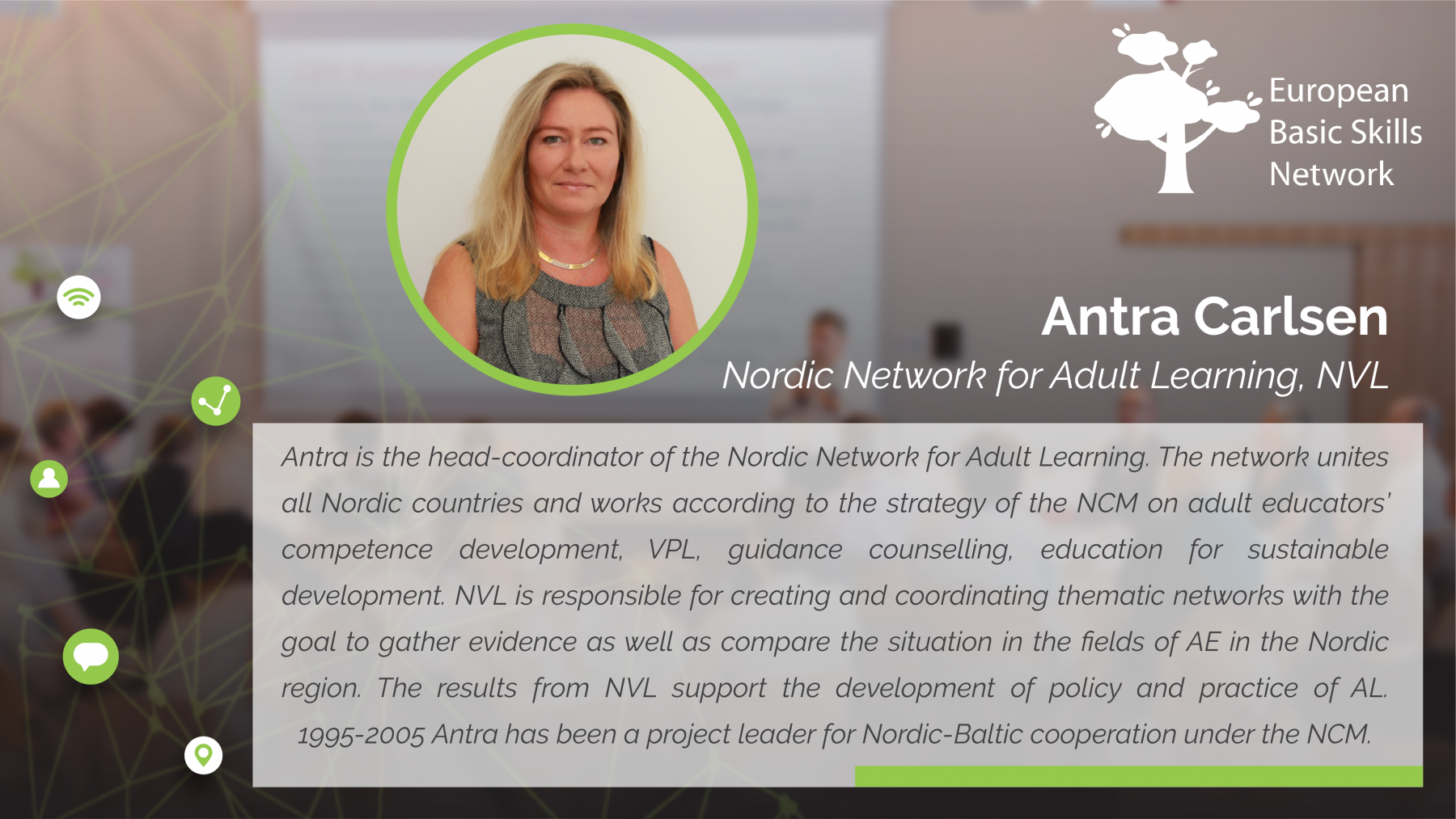
Competencies for an Adult Literacy Teacher for Immigrants – Antra Carlsen,The Nordic Alpha Council, NVL
Results of the first European research concerning outcome of adult education – Dr. Maurice de Greef, Maastricht University Education Against Marginalisation (EDAM)
The TRAIN project and its relevance for the professional development of basic skills trainers – Monica Tröster, German Institute for Adult Education
Writing your way to reading – Kari Gregersen,Vox
Model for teacher training – continuing education – Sissel Vollan,Vox
Alphabetisation for Immigrants to Europe – ALFIE – Hanne Christiansen,Vox
Working Skills
Vaduz, Liechtenstein, June 27. – 29.
For access to the presentations from the conference, click on the links.
The EBSN – presentation of membership, achievements and challenges ahead – Coordinator + Executive Committee
Presentation of the Task Force for Policy Briefs and the work ahead – Graciela Sbertoli, Vox, NO
The Commission’s Guidelines for Basic Skills – Martina Ni Cheallaigh
CEDEFOP’s work on key competences – Grethe Haugøy, Cedefop
UNISON Skills for Life Survey – Joyce Black, NIACE, UK
Improving Basic Skills in the Workplace – Helen Ryan, NALA, IE
Basic Skills for Employability in Spain – José Lara, Ministerio de Educación, ES
Contextualised Basic Skills: a Norwegian experience – Ørjan Lande Hansen, Vox, NO
Qualifying for the Labour Market (short film and presentation) – Mieke de Haan, MBO Raad, NL
Adult Literacies in Scotland 2020
